
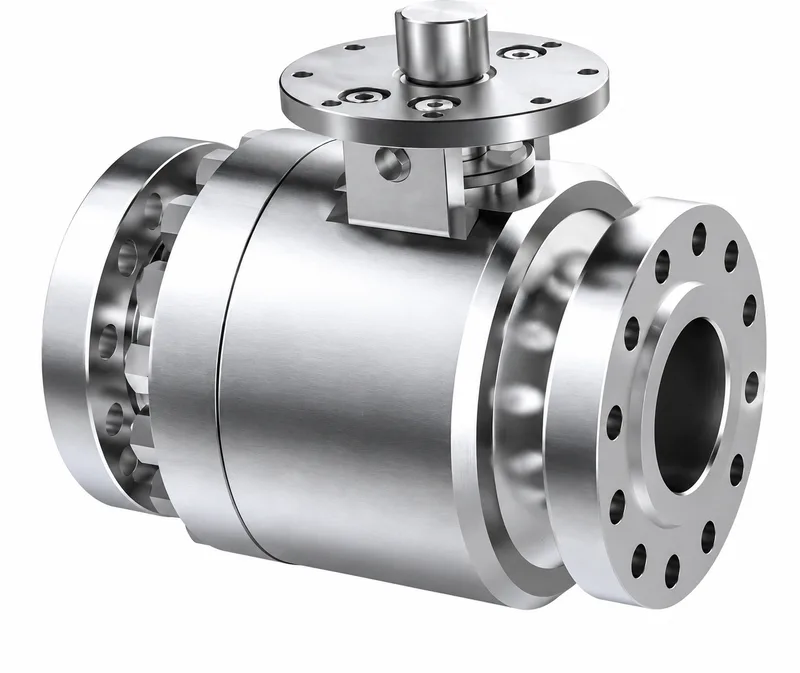
規格
| Valve body material | WCB, A105, CF8, CF8M |
|---|---|
| Bonnet material | WCB, CF8, CF8M, A105 |
| Ball material | A105, SS304, SS316 |
| Stem material | F6a, SS304, SS316 |
| Seat material | EPDM, Metal, Viton, PTFE, NBR |
| Nominal valve connection size | DN15 to DN200 |
| Pressure class / nominal rating designation | PN10 to PN160, Class 150 to Class 2500 |
| End connection types | RF, RTJ, BW |
| Operation / closure mode | Handle, Gear Operated, Electric Actuated |
| Design standards | ASME B16.34, BS5351, API 6D, API 608 |
| Face-to-face dimensional standard | ASME B16.10, API 6D |
| Flange standards | ASME B16.5 |
| Inspection and pressure-test standards | API 598, API 6D |
| Service temperature range | -46°C to 120°C |
應用與選型指引
Select by working pressure class first — the forged execution reaches Class 2500, above where cast floating bodies usually stop — then by seat material against line temperature (PTFE-family and elastomer seats versus metal seats for hot or abrasive service) and by end connection against the piping standard (RF/RTJ flanges per ASME B16.5 or butt-weld ends per ASME B16.25). At large bore or high torque duty the floating principle itself becomes the limit; there specify a trunnion-mounted execution instead of treating the two as interchangeable.
常見問題
Forged floating ball valve vs cast floating ball valve — what is the difference?
Both use the floating-ball seating principle; the difference is the body manufacturing route. A forged body (A105, CF8, CF8M executions) has a denser grain structure and is the usual choice for higher pressure classes and critical service, while cast bodies (WCB, CF8M castings) are more economical in the common Class 150 to 600 range. The collected benchmark page lists both forged and cast grades among its body material options, so the material certificate and pressure class — not the family name — should drive the choice.
Which pressure class and seat material should I pick?
Match the pressure class to the line design rating first: this execution spans PN10 to PN160 and Class 150 to Class 2500. Then pick the seat against media temperature — PTFE and elastomer seats (EPDM, NBR, Viton) cover most chemical, water and hydrocarbon duty within their temperature limits, and metal seats serve hot, dirty or abrasive media. Confirm the exact seat-versus-temperature pairing at quotation.
What information is needed to quote a forged floating ball valve?
Provide nominal size (DN15 to DN200 on the benchmark page), pressure class or PN rating, body and seat material preference, end connection (RF, RTJ or butt weld), operation (handle, gear or electric actuator), and the service medium with temperature. Those five to six data points let a quotation specify the exact execution and documentation set.
訂購與文件
文件
請在詢問時一併說明您需要的文件組合——此結構的常見項目(材質證明、按所列檢驗標準的測試報告、尺寸圖)將於報價時確認並隨附供應。
報價
可直接報價的詢問應說明:公稱口徑與壓力額定、閥體與閥座材質偏好、端部連接、操作方式,以及含溫度的使用介質。本頁的典型值為基準參考範圍;具有約束力的數值於報價時確認。
樣品與供應
供應條件、訂購數量與交期按訂單議定——請在詢問時說明目的地國家與所需時程。
儲存與運輸
閥門儲存時應保護閥座與密封件免受紫外線、臭氧與變形影響,安裝前保留端面保護蓋;彈性體或 PTFE 閥座結構應避免長期戶外存放——閥座材料在陽光直射與冰凍條件下老化最快。