
Zawory przepustnicowe · Przepustnice tróyekscentryczne
Przepustnice tróyekscentryczne kołnierzowe
Kołnierzowe przepustnice tróyekscentryczne to wykonanie z końcami kołnierzowymi geometrii tróyekscentrycznej: trzy wyraźne ekscentryki odstawiają oś gniazda od osi korpusu, więc dysk wchodzi w gniazdo kamowo z beztrzyciowym, dwukierunkowym uszczelnieniem metal-metal, a kołnierzowe końce śrubują się bezpośrednio do rurociągów z ratingiem klasowym, bez tulejowych uchwytów. Benchmarkowe wykonanie deklaruje pakiet korpusu z odlewu stalowego A216 WCB, dysku, dławnicy i pierścienia mocującego w DN50 do DN500 przy PN10 do PN63 i Class 150 do Class 1500, uszczelki grafitowe z pierścieniem SS304+grafit oraz napęd przekładniowy, elektryczny lub pneumatyczny.
Część rodziny Przepustnice tróyekscentryczne
Ostatnia aktualizacja: 2026-11
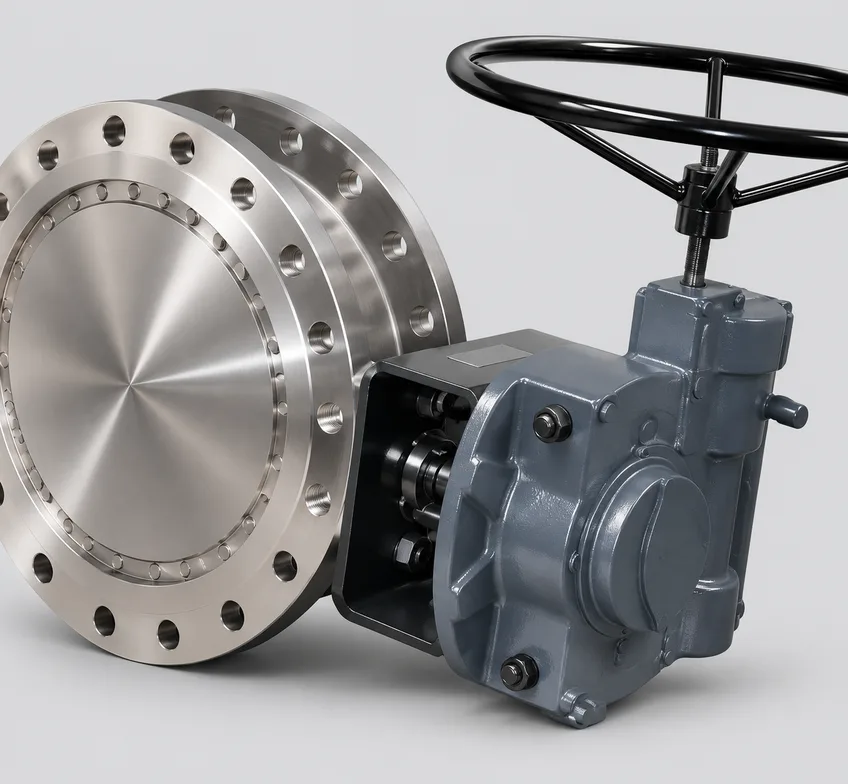
Specyfikacje
| Valve body material | ASTM A216 WCB |
|---|---|
| Disc Materials | ASTM A216 WCB |
| gland materials | ASTM A216 WCB |
| gasket materials | Graphite |
| seal ring materials | SS304+Graphite |
| retaining ring materials | ASTM A105 |
| end cap materials | ASTM A105 |
| Operation / closure mode | Gear Operated, Electric Actuated, Pneumatic Actuated |
| End connection types | Flanged |
| Nominal valve connection size | DN50 to DN500 |
| Pressure class / nominal rating designation | PN10 to PN63, Class 150 to Class 1500 |
| Design standards | BS5155, EN 593 |
| Face-to-face dimensional standard | ASME B16.5, DIN 3202 F4, EN 558-1 |
| Flange standards | DIN, ANSI B16.1, BS4504, EN 1092 |
| Inspection and pressure-test standards | API 598 |
Wskazówki aplikacyjne i dobór
Specify this execution where a fire-safe-minded, zero-leakage metal seat is required and the line calls for flanged ends rather than a wafer or lug body: steam, hydrocarbon and high-temperature duties inside PN10 to PN63 or Class 150 to Class 1500. Size within DN50 to DN500, choose the operator for torque and fail-safe needs, and confirm the face-to-face (DIN 3202 F4 / EN 558-1 family) against the mating flange standard before ordering.
Najczęstsze pytania
Triple offset vs double offset butterfly valve - what changes?
Double offset geometry still uses an interference seat, so sealing rubs and soft or graphite seals wear. The third offset cams the disc into the seat perpendicular to the axis, making sealing friction-free and fully metal-to-metal - tight shutoff at high temperature with a seat that does not rub itself apart. For steam, hydrocarbons and other hot duties inside the declared class range, the triple offset execution is the durable choice.
Why a flanged body instead of wafer or lug?
Flanged ends bolt directly to matching class flanges, which suits pipework specified to DIN or ANSI B16.1-class flange standards and simplifies removal for maintenance in heavier service. Wafer and lug bodies save length, but where the plant standard expects bolted joints, the flanged execution installs without special clamp length planning.
What information is needed to quote a flanged triple offset butterfly valve?
Nominal size in the DN50 to DN500 band, pressure class (PN10 to PN63 or Class 150 to Class 1500), operator choice (gear, electric, pneumatic), the mating flange standard, and the medium with its temperature. Those points fix the execution, seal ring and operator for a quotation-ready inquiry.
Zamawianie i dokumentacja
Dokumenty
Zamów wraz z zapytaniem zestaw dokumentacji, którego potrzebujesz — typowe pozycje dla tego wykonania (świadectwa materiałowe, raporty badań wg podanej normy inspekcyjnej, rysunki wymiarowe) są potwierdzane i dostarczane wraz z ofertą.
Wycena
Zapytanie gotowe do wyceny podaje: średnicę nominalną i ciśnienie znamionowe, preferencje materiału korpusu i gniazda, przyłącze, sterowanie oraz medium pracy z temperaturą. Typowe wartości na tej stronie to referencyjne zakresy benchmarkowe; wartości wiążące są potwierdzane w ofercie.
Próbka i dostawa
Warunki dostawy, ilości zamówienia i termin są ustalane dla każdego zamówienia — podaj kraj przeznaczenia i wymagany harmonogram wraz z zapytaniem.
Przechowywanie i wysyłka
Przechowuj zawory z gniazdami i uszczelnieniami chronionymi przed UV, ozonem i odkształceniem, trzymaj osłony powierzchni przylgowych do momentu montażu, a w wykonaniach z gniazdami elastomerowymi lub PTFE unikaj długotrwałego przechowywania na zewnątrz — mieszanki gniazd starzeją się najszybciej w bezpośrednim słońcu i mrozie.
Wiedza: poradniki doboru
Zapytaj o wycenę: Przepustnice tróyekscentryczne kołnierzowe
Prześlij wymaganie dla tego wykonania tutaj — zapytanie gotowe do wyceny podaje parametry wymienione pod polem wiadomości; wartości wiążące są potwierdzane w ofercie.
Co dzieje się z Państwa danymi, opisuje nasza klauzula prywatności.
Wycena dla Przepustnice tróyekscentryczne kołnierzowe
Prześlij średnicę, klasę ciśnienia i materiały, aby zapytanie było gotowe do wyceny — odpowiadamy dokumentami i warunkami.
Zapytaj o wycenę