
Kugelhähne · Schwimmkugelhähne
Gegossene Schwimmkugelhähne
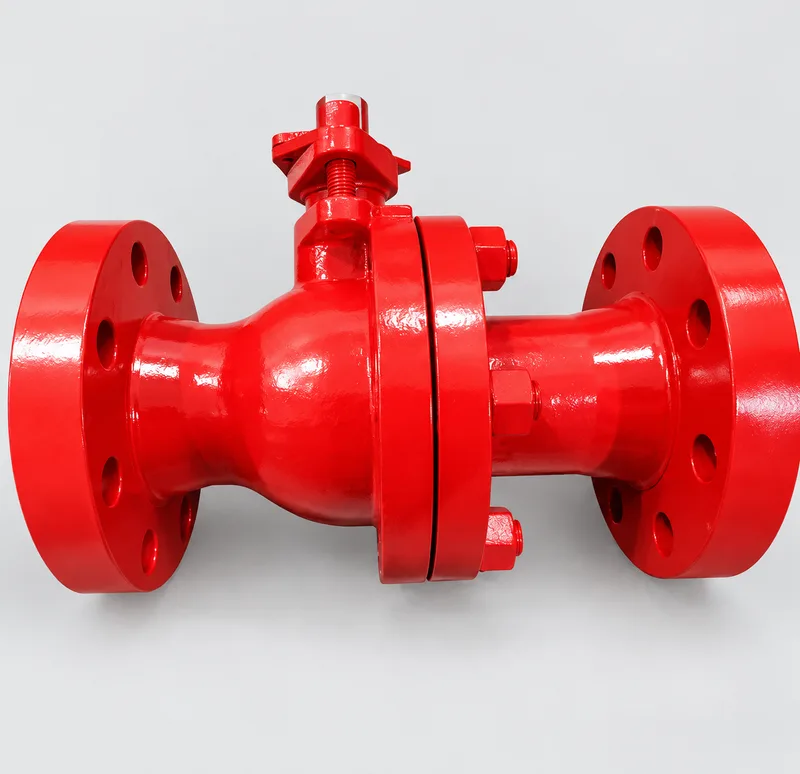
Gegossene Schwimmkugelhähne sind die Gusskörper-Ausführung des Schwimmkugel-Prinzips: Der Leitungsdruck presst die durchbohrte Kugel auf den hinteren Sitz, sodass die Dichtekraft mit dem Leitungsdruck wächst statt von einer Feder oder Zapfenlagerung zu kommen. Die gegossenen WCB- und CF8/CF8M-Ausführungen der Benchmark-Seite decken DN15 bis DN200 bei Class 150 bis 600 (PN16 bis PN100), -46 bis +200 C, in Vollbohrungs- und reduzierten Bohrungswegen mit RF-, RTJ- und Schweißenden, PTFE-/RPTFE-Sitzen und Fire-Safe-Auslegung nach API 607 und 6FA ab.
Teil der Schwimmkugelhähne Familie
Zuletzt aktualisiert: 2026-11
Technische Daten
| Design standards | API 6D, ASME B16.34, BS5351, API 608, MSS-SP-72 |
|---|---|
| Face-to-face dimensional standard | ASME B16.10, API 6D |
| Flange standards | ASME B16.5 |
| Fire Safe Design | API 607, API 6FA |
| bore type | Full bore, Reduced bore |
| Nominal valve connection size | DN15 to DN200 |
| End connection types | RF, RTJ, BW |
| Pressure class / nominal rating designation | Class 150 to 600 (PN16 to PN100) |
| Service temperature range | -46 to +200 C |
| Valve body material | WCB, CF8, CF8M, F304, F316, LF2, F22 |
| Bonnet material | WCB, CF8, CF8M, F304, F316, LF2, F22 |
| Ball material | F304, F316 |
| Stem material | WCB, F304, F316, F6a |
| Seat material | PTFE, RPTFE |
| Packing Materials | Graphite, PTFE |
| gasket materials | SS304, Graphite |
| Operation / closure mode | Handle, Gear, Electric actuator, Pneumatic Actuator |
Anwendungs- und Auswahlhilfe
Select by bore first (full bore for pigging or high-viscosity lines, reduced bore where a smaller ball is acceptable), then by seat: PTFE and RPTFE cover most duties inside the -46 to +200 C window, and the packing and gasket compounds matter for fugitive-emission or graphite-required plants. End connection follows the piping standard (RF or RTJ flanges, butt weld for welded lines). At high pressure or large bore the floating design reaches its torque limit; move to a trunnion-mounted execution rather than oversizing the actuator.
Häufig gestellte Fragen
Cast floating ball valve vs forged floating ball valve - which should I specify?
Both seat the same floating-ball way; the difference is the body manufacturing route. Cast bodies (WCB, CF8, CF8M) are the economical choice in the common Class 150 to 600 window, while forged bodies suit higher classes and critical service. Compare the pressure class and material certificate of the two executions rather than treating either family name as a quality grade.
What does the fire-safe designation API 607 / 6FA mean for this valve?
It means the seat-and-seal package is designed to keep a measure of tightness after a fire event: when the soft PTFE seats burn away, metal-to-metal contact and graphite secondary seals take over. Hydrocarbon service normally requires it; utilities and water lines usually do not. Confirm the required fire-safe test standard against the end user specification before ordering.
What information is needed to quote a cast floating ball valve?
Nominal size (DN15 to DN200 on the benchmark page), pressure class or PN rating, body and seat material preference, end connection (RF, RTJ or butt weld), operation (handle, gear, electric or pneumatic actuator), and the medium with its temperature. A quotation-ready inquiry with those points lets the execution, seat compounds and documentation set be confirmed exactly.
Bestellung & Dokumentation
Unterlagen
Fordern Sie den benötigten Unterlagensatz mit der Anfrage an — übliche Positionen für diese Ausführung (Werkstoffzeugnisse, Prüfberichte nach der genannten Prüfnorm, Maßzeichnungen) werden bestätigt und mit dem Angebot geliefert.
Angebot
Eine angebotsreife Anfrage nennt: Nenngröße und Druckstufe, bevorzugten Gehäuse- und Sitzwerkstoff, Anschlussart, Betätigung sowie das Fördermedium mit Temperatur. Typische Werte auf dieser Seite sind Benchmark-Referenzbereiche; die verbindlichen Werte werden im Angebot bestätigt.
Muster & Lieferung
Lieferbedingungen, Bestellmengen und Lieferzeit werden je Bestellung vereinbart — nennen Sie das Bestimmungsland und den benötigten Termin mit der Anfrage.
Lagerung & Versand
Armaturen so lagern, dass Sitze und Dichtungen vor UV, Ozon und Verformung geschützt sind, Schutzkappen an den Dichtflächen bis zum Einbau belassen und bei Ausführungen mit Elastomer- oder PTFE-Sitz langfristige Freilagerung vermeiden — Sitzwerkstoffe altern am schnellsten unter direkter Sonne und bei Frost.
Wissen: Auswahlhilfen
Angebot für Gegossene Schwimmkugelhähne anfordern
Senden Sie die Anforderung für diese Ausführung hier — eine angebotsreife Anfrage nennt die Parameter unter dem Nachrichtenfeld; die verbindlichen Werte werden im Angebot bestätigt.
Was mit Ihren Angaben geschieht, ist in unserer Datenschutzerklärung beschrieben.
Angebot für Gegossene Schwimmkugelhähne erhalten
Senden Sie Größe, Druckstufe und Werkstoffe für eine angebotsreife Anfrage — beantwortet mit Unterlagen und Bedingungen.
Angebot anfordern